Trends to Watch in the Future of Mining in Africa
Africa’s mining sector is on the brink of a major transformation. Long known for its rich deposits of gold, diamonds, copper, and cobalt, the continent is now gaining global attention for its critical role in supplying the minerals that power the world’s clean energy and digital revolutions. As demand for electric vehicles, solar panels, and batteries accelerates, so does the pressure on African nations to modernize and scale their mining operations in a sustainable and inclusive way.
In this new era, the conversation is shifting from extraction to value creation, transparency, and long-term impact. From critical mineral demand to tech-driven exploration, sustainable practices, and new regional trade dynamics, there are several powerful forces reshaping the industry. This article explores the trends to watch in the future of mining in Africa, insights that investors, governments, and stakeholders can’t afford to ignore.
Key Highlights
- Critical Minerals Are in High Demand. The global clean energy transition is fueling a surge in demand for minerals like lithium, cobalt, and graphite, positioning African nations such as the DRC, Tanzania, and Zimbabwe at the center of the global supply chain.
- Local Value Addition Is the New Norm. African governments are shifting away from exporting raw materials and promoting in-country processing and refining, creating more jobs and increasing national revenues.
- Sustainability and ESG Are Non-Negotiable. Global investors now require mining operations to meet strict environmental, social, and governance standards, making ethical sourcing and community benefit critical for market access.
- Technology Is Revolutionizing African Mining. Innovations like AI, drones, and blockchain are streamlining exploration and operations. Companies like AfriSwiss are helping artisanal miners adopt simplified tech solutions for greater efficiency and compliance.
1. Critical Minerals Take Center Stage
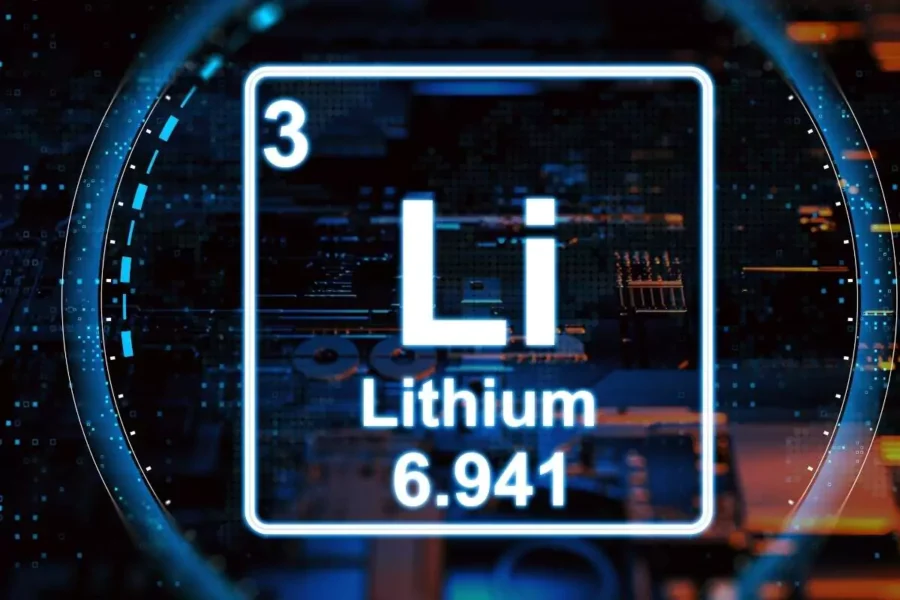
As the global push for decarbonization accelerates, critical minerals have moved from niche commodities to indispensable assets in the clean energy economy. These minerals, including lithium, cobalt, graphite, nickel, and rare earth elements, are essential components in electric vehicle (EV) batteries, solar panels, wind turbines, and energy storage systems. Their unique properties make them irreplaceable in high-performance technologies, leading to a surge in demand that is outpacing current supply.
Africa is quickly becoming the focal point in this mineral rush. Countries such as the Democratic Republic of Congo (DRC), Tanzania, Namibia, and Zimbabwe boast some of the world’s largest and most accessible reserves of these high-demand materials. For instance, the DRC supplies over 70% of the world’s cobalt, while Zimbabwe is home to significant lithium deposits. These countries are now seeing an influx of exploration projects, mining licenses, and infrastructure investments as foreign companies look to secure long-term supply agreements.
However, it’s not just about extraction. African governments are increasingly demanding greater control, transparency, and beneficiation within their borders. New policies are being introduced to ensure that critical minerals are not just exported as raw materials but are also processed and refined locally, creating jobs and building national capacity. This shift toward resource sovereignty is turning Africa from a passive supplier into a strategic partner in the global energy transition.
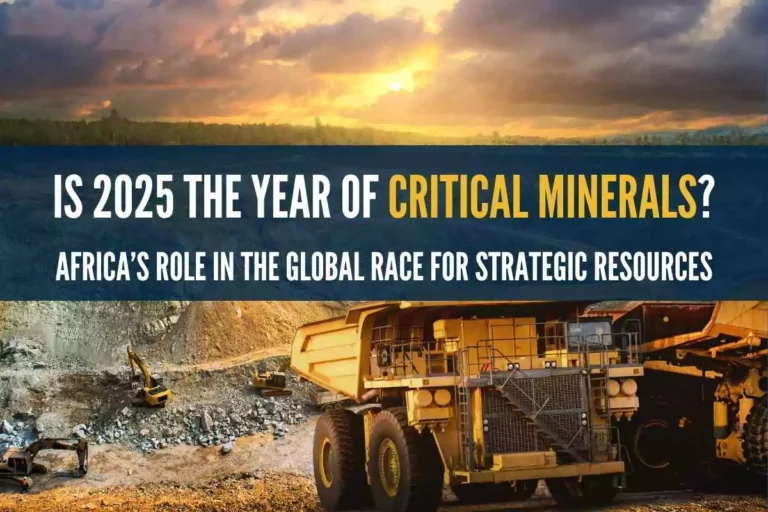
2025 has been dubbed the “Year of Critical Minerals” and Africa holds the key.
2. Shift Toward Local Value Addition
In the past, much of Africa’s mineral wealth left the continent in raw form, with little value retained by local economies. That model is changing. Governments across Africa are increasingly enforcing policies that require local value addition, mandating that minerals be processed, refined, or even manufactured into end-products within their borders before export. This strategic shift is designed to capture more of the economic benefits of the mining industry, from job creation and skills development to increased revenues and technology transfer.
Countries like Tanzania, Ghana, Zambia, and Zimbabwe are leading the charge with legislation that promotes in-country smelting, local ownership, and downstream beneficiation. For investors, this means greater accountability and a stronger focus on long-term partnerships. For local communities, it translates into better infrastructure, employment opportunities, and more sustainable development. As the global demand for responsibly sourced and processed minerals grows, Africa’s pivot to local value addition is not just a policy trend, it’s a competitive advantage.
3. Rise of Sustainable and Ethical Mining
As environmental and social consciousness continues to shape global markets, the pressure is mounting on the mining industry to clean up its act. The rise of ESG (Environmental, Social, and Governance) compliance has become a game-changer, especially for African countries looking to attract responsible investment. Today’s investors and buyers don’t just want high-grade minerals, they want ethical sourcing, clean operations, and inclusive development.
This means mining companies must now answer tough questions:
- Is the mine ethical?
- Are local communities benefiting?
- How is the environment being protected?
In response, many African governments are introducing stricter environmental regulations, transparency requirements, and community engagement frameworks. Certification schemes and traceability tools, such as blockchain and digital tagging, are becoming standard for verifying the origin of minerals. Companies that fail to meet ESG expectations risk being locked out of international markets, particularly in the EU, UK, and North America, where sustainability standards are being written into trade laws. In this new era, ethical mining is no longer optional, it’s essential for competitiveness, credibility, and long-term survival.
4. Tech-Driven Exploration and Operations
Across Africa, technology is transforming how mines are discovered, developed, and managed. From AI-powered geological mapping to satellite imaging and real-time data analytics, tech is streamlining exploration and improving accuracy. In active operations, drones and IoT sensors monitor equipment, track worker safety, and optimize energy use. Blockchain systems are also being deployed to guarantee the traceability of minerals, an increasingly important factor in global supply chains demanding proof of ethical sourcing. These tools reduce costs, minimize environmental disruption, and speed up timelines, helping African mining operations compete on the global stage.
AfriSwiss plays a critical role in making this revolution inclusive. While large mining corporations have the capital to adopt cutting-edge systems, artisanal and small-scale miners often lack access to such tools. That’s where AfriSwiss steps in, helping bridge the gap with simplified, cost-effective tech solutions like mobile mapping apps, solar-powered dry washers, and portable gold testing kits. By empowering these miners with accessible innovations, AfriSwiss is increasing efficiency, transparency, and safety across grassroots mining communities, ensuring no one is left behind in Africa’s tech-driven mining future.
5. Policy Shifts and Regional Integration
The African Continental Free Trade Area (AfCFTA) is rapidly becoming a game-changer for the mining industry. By easing cross-border trade and harmonizing tariffs, AfCFTA is unlocking new opportunities for regional collaboration in infrastructure, mineral processing, and logistics. This integration means that minerals mined in one country can be processed in another, boosting economies of scale and fostering interdependence among African nations. It also makes the continent more attractive to global investors looking for unified, stable markets.
At the same time, many African countries are revising their mining codes to reflect a more balanced and sustainable approach to development. Reforms are increasingly focused on encouraging responsible foreign investment, increasing local equity and participation, and ensuring that communities receive a fair share of revenues. This trend toward “resource nationalism with a sustainability lens” is redefining how mining deals are structured, moving away from exploitative models and toward partnerships that prioritize long-term growth, transparency, and accountability.
Looking Ahead: Africa’s Mining Destiny
Africa’s future in mining is bright, but not without its challenges. Infrastructure gaps, political risk, and community relations will continue to test the industry. Still, with the right partnerships, ethical frameworks, and innovation, Africa can move from being a source of raw materials to a hub of responsible resource transformation.
At AfriSwiss, we’re helping build that future, by connecting global buyers with verified sellers, supporting artisanal mining communities, and advocating for fair, sustainable, and transparent mining practices across the continent.
Africa’s mining future is unfolding, will you be part of it?
Connect with AfriSwiss to explore opportunities, insights, and innovations shaping tomorrow’s mining landscape